What counts as storm and flood damage?
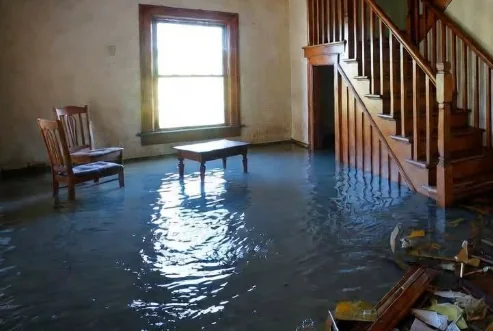
Storm damage is water that enters through a damaged roof, windows, or walls during wind, hail, or heavy rain. Flood damage is rising surface water that comes in from outside, at ground level. Insurers treat them very differently, so it helps to know which one you have.
Storm damage from above is usually covered by a Texas homeowners policy. Rising water from a creek, street, or yard is flood, which usually needs a separate flood policy through the National Flood Insurance Program (NFIP) or a private carrier.
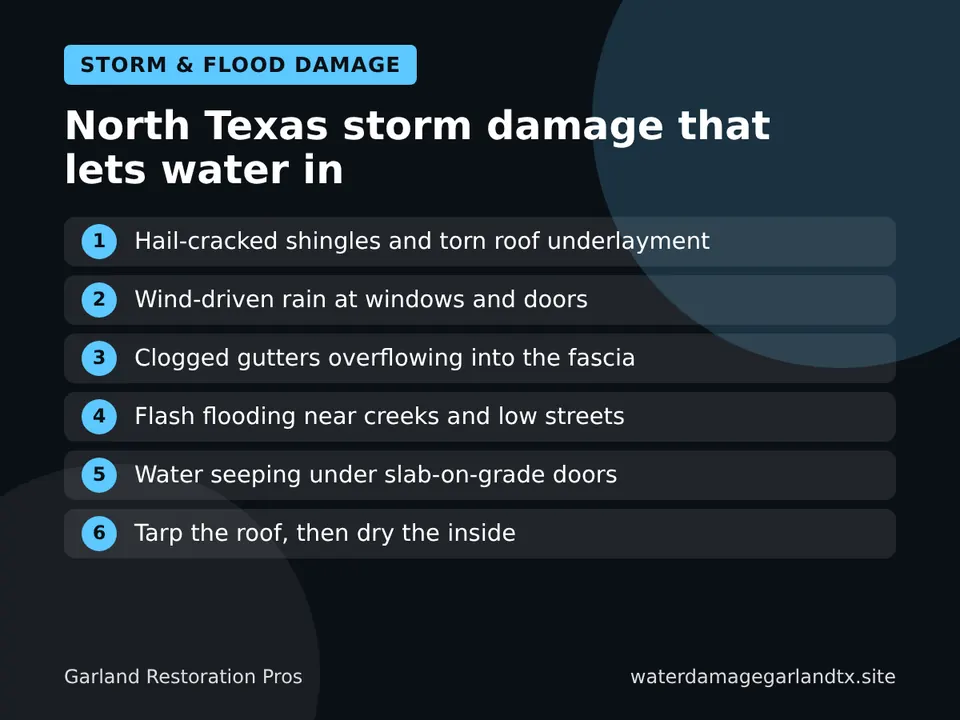
North Texas storms that cause water damage
Garland sits in one of the most active hail areas in the country. Spring and early summer bring severe thunderstorms, large hail, straight-line winds, and heavy rain that can drop several inches in a few hours.
- Hail. Cracks and bruises shingles, punches skylights, and tears vents. Leaks may show up weeks later.
- Straight-line wind. Lifts shingles, drops tree limbs, and drives rain past window and door seals.
- Flash flooding. Duck Creek, Rowlett Creek, and Spring Creek rise fast. Low streets and yards that slope toward a home send water under doors.
- Ice storms. Ice dams are rare, but ice-laden limbs fall onto roofs and power lines.
Signs of storm water damage inside
- New ceiling stains after a storm, often near chimneys, vents, or valleys
- Wet insulation in the attic or daylight through the roof deck
- Water on window sills or stains below windows
- Wet carpet along exterior walls or near sliding doors
- Water in the garage after heavy rain
- A musty smell in rooms closed during the storm
How storm and flood cleanup works
Storm cleanup in Garland usually follows five steps: secure the building with a roof tarp or board-up, extract water, remove soaked materials, dry the structure, and document the loss for your claim. Flood water from outside is treated as Category 3 and gets extra cleaning.
- Secure the home. Tarps on the roof and plywood over broken windows stop more water from coming in.
- Extract. Standing water is removed from floors, carpets, and the garage slab.
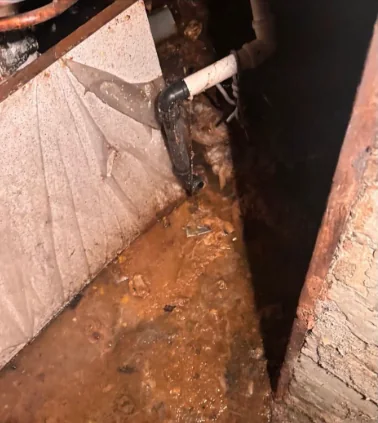
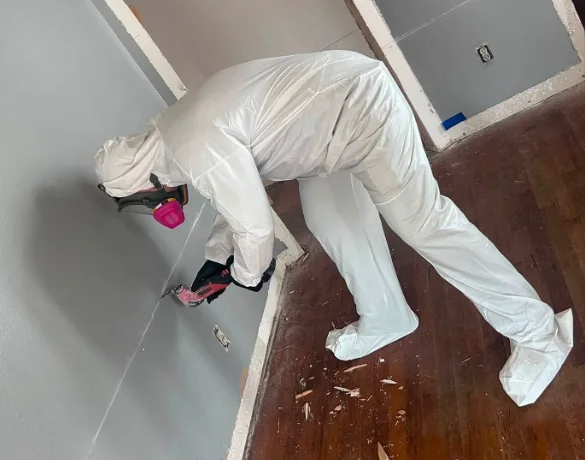
- Remove soaked materials. Insulation, drywall, and carpet pad wet by storm water come out. Anything touched by flood water is discarded if porous.
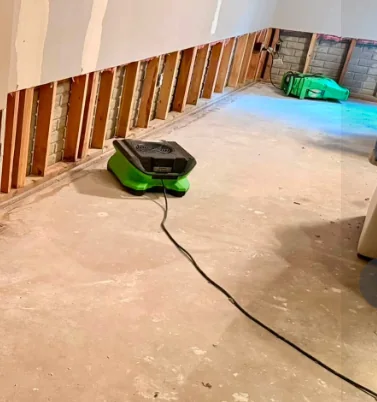
- Clean and dry. Antimicrobial is applied, and air movers and dehumidifiers run for several days.
- Document. Photos of the roof, the water line, and every damaged item go to your adjuster.
Storm and flood damage costs in Garland
Storm water cleanup in Garland usually costs about $1,500 to $6,000 for interior dry-out after a roof leak. Ground-level flood cleanup with Category 3 water costs more, often $3,000 to $15,000, depending on how many rooms were reached.
| Storm job | Approx. cost |
|---|---|
| Emergency roof tarp | $300 – $1,000 |
| Ceiling and attic dry-out after roof leak | $1,500 – $4,000 |
| Garage flood extraction and cleanup | $500 – $1,500 |
| Ground-level flood, several rooms | $5,000 – $15,000+ |
Storm damage and insurance in Texas
Report storm damage quickly. Texas law generally allows up to two years to file a hail or windstorm claim, but waiting makes it harder to prove the date of loss and can let interior damage grow. Take photos before tarping and keep receipts.
Ask your insurer whether your policy has a separate wind and hail deductible, often 1% or 2% of the home's insured value. If water came in at ground level, check whether you have flood coverage before you file.
Garland flood risk: creeks, streets, and the lake
Garland's flash flood risk follows its creeks. Duck Creek runs north to south through the middle of the city, Rowlett Creek and Spring Creek cross the north side, and Lake Ray Hubbard borders the east. Low streets and yards near these channels can take on water quickly in a heavy storm.
Most storm water in Garland homes does not come from the creek itself. It comes from water that cannot drain fast enough: blocked storm inlets, yards graded toward the house, or gutters that overflow next to the slab. That water seeps under exterior doors and through the garage.
You can check your home's flood zone on FEMA's Flood Map Service Center. Even if you are outside a mapped zone, a flood policy can be affordable and is the only way to cover rising water. Remember the usual 30-day waiting period before it takes effect.
After any storm, walk the attic with a flashlight. Wet insulation or daylight through the roof deck tells you to call before the next rain.
Storm prep for Garland homes
- Clean gutters and downspouts before spring storm season.
- Trim limbs that hang over the roof.
- Check window and door seals each year.
- Grade soil away from the foundation so water drains off.
- Keep a tarp, a flashlight, and your insurer's claim number handy.
Once the house is dry, storm repairs move to water damage repair in Garland.
Related reading: texas homeowners insurance water damage guide and how long water damage takes to dry.