How Long Does Water Damage Take to Dry Out?
A day-by-day drying timeline for Garland homes, why humid Texas weather slows it down, and how moisture readings prove a home is dry.
With commercial air movers and dehumidifiers, most water damage in a Garland home dries in 3 to 5 days. Hardwood floors, plaster, concrete slabs, and cabinets can take 5 to 10 days. Without professional equipment, wet walls can stay damp for weeks, long enough for mold to grow.
"Dry" is not a feeling. Drywall can feel dry on the surface while the back side and the studs behind it are still wet. Pros use moisture meters to compare wet areas with dry ones in the same house, and only stop when the numbers match.
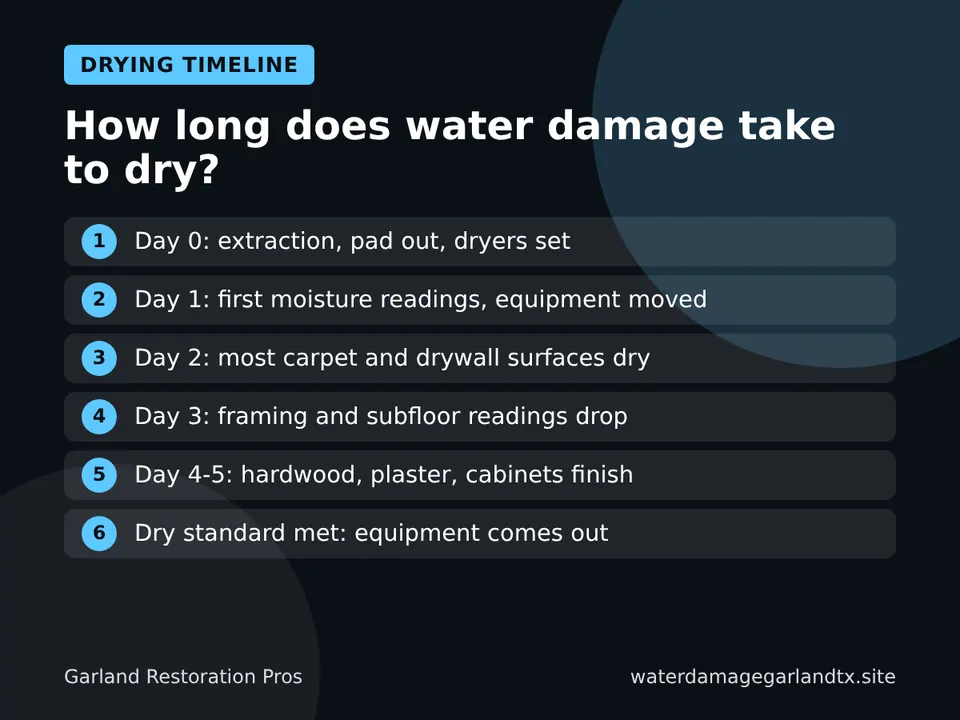
A typical day-by-day drying timeline
Day 0: Extraction and setup
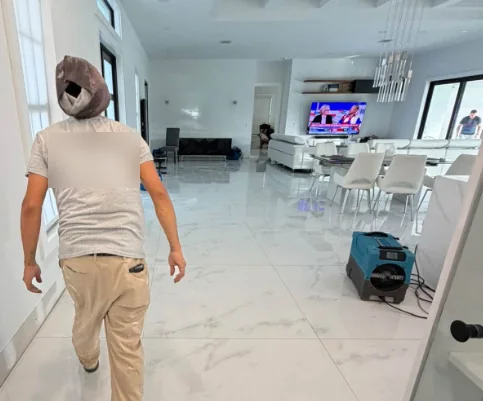
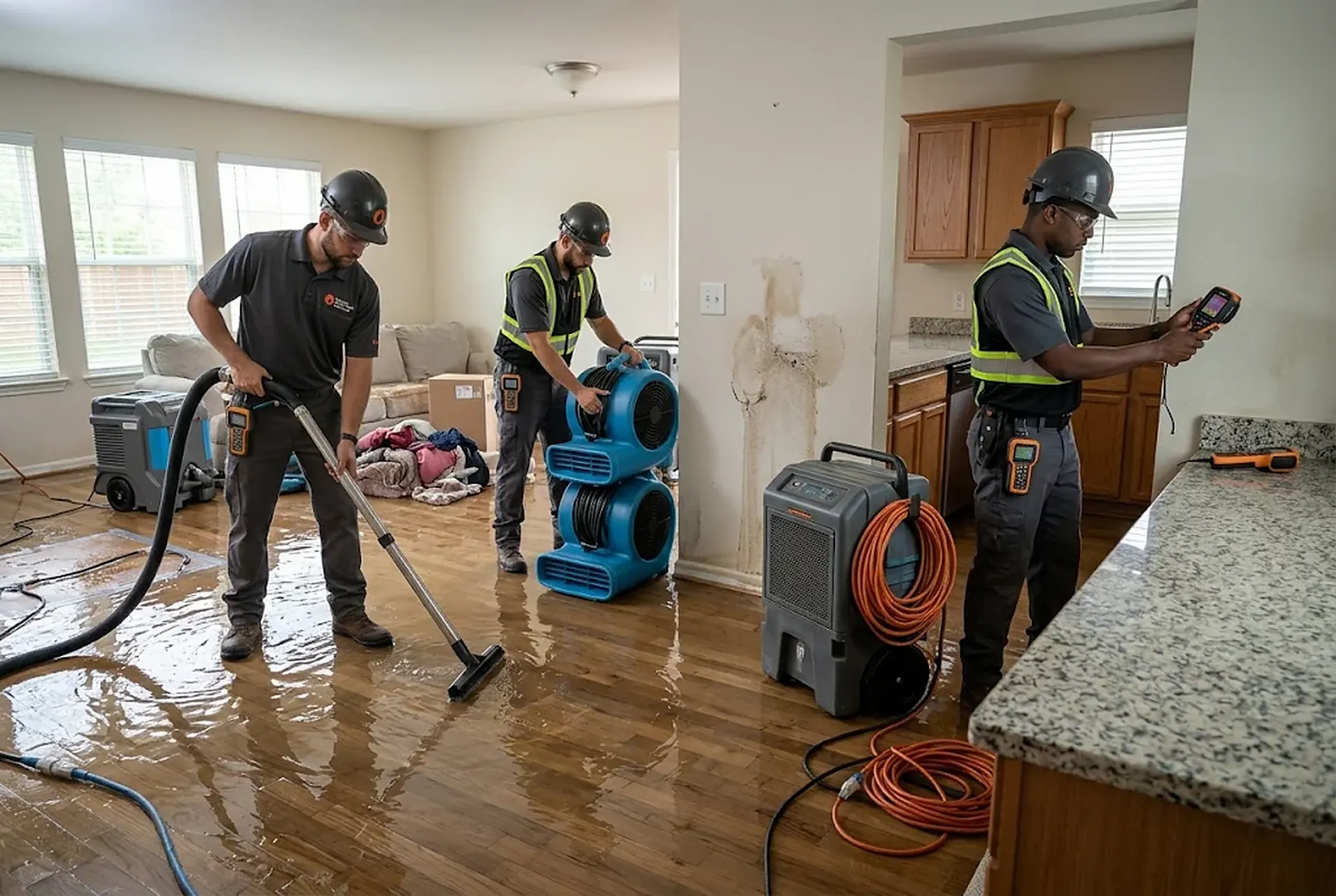
The crew stops the source, extracts standing water, removes carpet pad and wet baseboards, and makes flood cuts if needed. Air movers and LGR dehumidifiers are placed, and first moisture readings are logged.
Day 1: First check
Readings drop fast on carpet and painted drywall surfaces. Equipment may be moved to aim at wetter spots. Dehumidifier water output is high.
Day 2: Surfaces dry
Most carpet and drywall surfaces are close to dry. Framing and the bottom plate of walls still read wet.
Day 3: Framing and subfloor
Wood framing and subfloor readings come down. In many one-room jobs, this is the last day.
Days 4–5: Dense materials
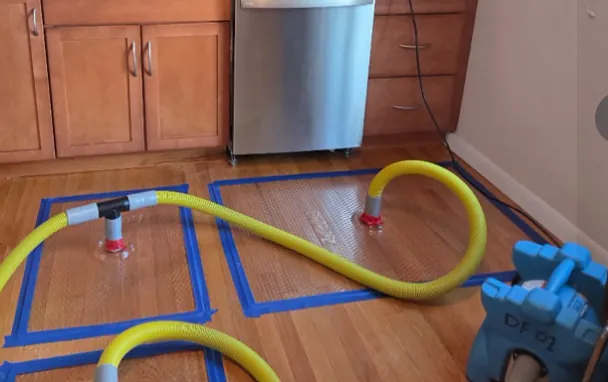
Hardwood, plaster, cabinets, and concrete keep releasing moisture slowly. Specialty drying mats or wall cavity injection may be used.
What slows drying in Garland homes?
Humid outdoor air, dense materials, water trapped under flooring or in wall cavities, cold weather, and closed-up rooms all slow drying. Garland's summer humidity and its many slab-on-grade homes with tile or wood floors are the most common reasons a job runs long.
- Humidity. On muggy North Texas days, opening windows can add moisture instead of removing it. Crews keep the home closed and let dehumidifiers do the work.
- Concrete slabs. Most Garland homes are slab-on-grade. Concrete holds water and releases it slowly under tile and wood.
- Hidden water. Water under cabinets, behind tub surrounds, or inside wall cavities needs to be opened up or injection-dried.
- Cold. In winter, low indoor temperatures slow evaporation. Crews may use heat with the dehumidifiers.
- Water category. Dirty water means more materials are removed, which can actually speed drying because less is left to dry.
How pros know it's dry
The crew takes readings from unaffected materials in your home to set a dry standard. Each wet area is measured daily until it matches. The log of readings is what your insurance adjuster looks for, and it tells you the walls are safe to close up.
Can you speed it up?
- Keep doors and windows closed unless the crew says otherwise.
- Keep the AC running at a normal temperature.
- Do not turn off or move the equipment.
- Keep pets and kids away from cords and machines.
- Remove wet items like rugs and boxes from the room.
Drying times by material
| Material | Typical drying time with pro equipment |
|---|---|
| Carpet (pad removed) | 1–2 days |
| Painted drywall | 2–3 days |
| Wood framing and baseboards | 3–4 days |
| Subfloor and plywood | 3–5 days |
| Hardwood flooring | 5–10 days |
| Concrete slab | 5–14 days |
These are typical ranges for clean water caught early. Dirty water, cold weather, or water that sat for days can stretch every line on the table.
Drying after a summer leak versus a winter freeze
A July attic AC overflow dries differently from a February burst pipe. In summer, outdoor humidity is high, so crews keep windows shut and run more dehumidifier capacity. In winter, the air is drier but colder, so they may add heat to keep evaporation moving. Either way, daily readings, not the calendar, decide when the job is done.
Why fast drying matters
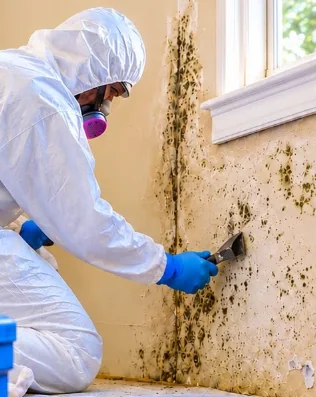
Mold can begin growing within 24 to 48 hours on wet drywall and wood. Read our guide to mold after water damage in Garland. If water is still on the floor, start with water damage cleanup in Garland so drying can begin today.
Need help with this now? See emergency water damage mitigation in Garland, or read mold after water damage timeline.