Mold After Water Damage: How Fast It Grows and What to Do
How quickly mold follows a leak in humid North Texas, the warning signs, Texas licensing rules, and how to keep mold from starting.
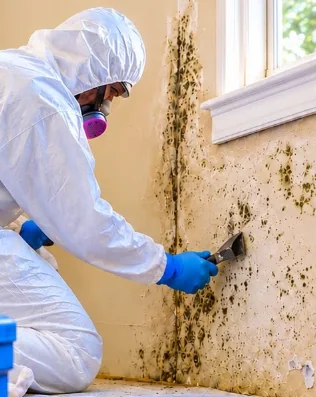
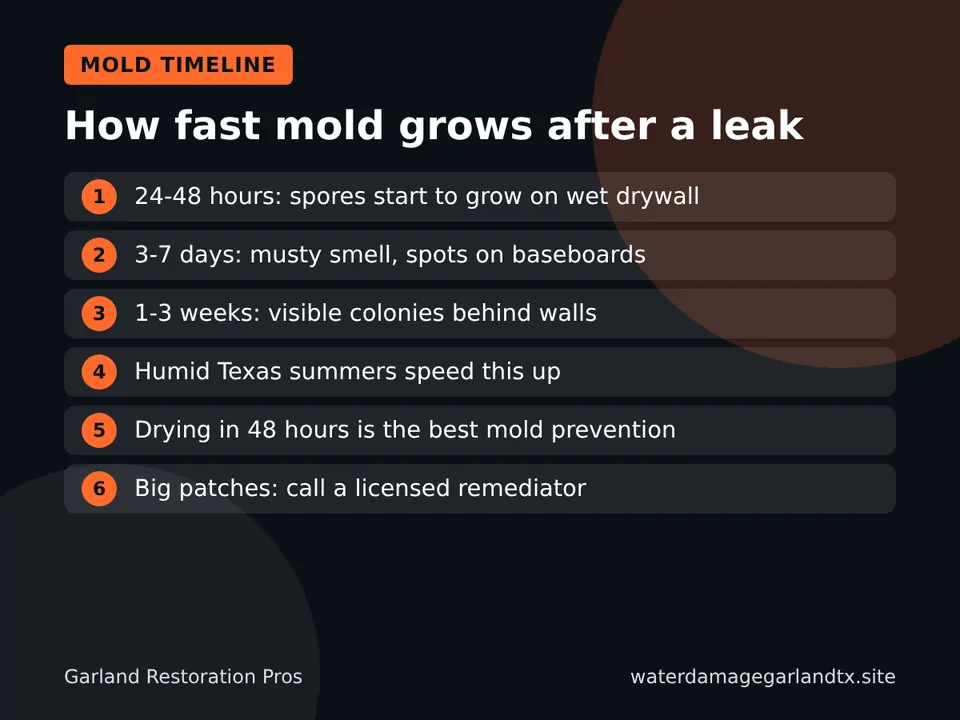
Mold can start growing on wet drywall, wood, and carpet backing within 24 to 48 hours after water damage. In warm, humid Garland weather, visible spots and a musty smell often show up within one to two weeks. Drying the home within 48 hours is the best way to stop it.
Mold spores are everywhere, indoors and out. They only grow when they land on something wet that they can feed on. A leak gives them both. That is why mold almost always follows water damage that was not dried quickly or completely.
The mold timeline after a leak
- 0–24 hours: Materials soak up water. No visible growth yet.
- 24–48 hours: Spores begin to germinate on wet drywall paper and wood.
- 3–7 days: Musty odor. Small spots on baseboards, under sinks, or at the bottom of walls.
- 1–3 weeks: Visible colonies, often behind walls, under flooring, and in wet insulation.
- Months: Rot in framing and subfloor if the moisture continues.
6 warning signs of mold after water damage
- A musty or earthy smell, often stronger in closed rooms
- Dark spots or fuzzy growth on drywall, trim, or ceilings
- Peeling or bubbling paint near the floor or ceiling
- Warped baseboards or flooring
- Allergy-like symptoms that ease when you leave home
- A past leak that was mopped up but never professionally dried
Why Garland homes are at higher risk
Long, humid summers, attic AC units and water heaters, slab-on-grade floors that hold moisture, and storm-driven leaks give mold more chances to grow in Garland homes than in drier climates.
A slow drip from an attic AC pan in August is the classic Garland mold call. The insulation and ceiling stay wet for weeks before a stain appears. By then, mold may have spread across the back of the drywall.
The Texas 25 square foot rule
Under Texas Department of Licensing and Regulation rules, mold remediation of 25 contiguous square feet or more generally requires a licensed mold assessor to write a plan and a separate licensed remediation contractor to do the work. A clearance check follows. Homeowners working on their own home are exempt, but insurers and future buyers often ask for the paperwork.
What to do if you find mold
Fix the moisture first, keep the area closed off, do not disturb large patches, and call a professional. Small spots on hard surfaces can be cleaned with detergent and water while wearing gloves and an N95 mask.
- Do not use bleach on drywall or wood. It does not kill mold roots in porous materials.
- Do not dry-sand or scrape mold; it spreads spores.
- Turn off the HVAC if mold is near a return vent.
- Call for water damage mold remediation in Garland for anything larger than a few square feet.
Mold versus mildew
Mildew is a surface mold that grows flat on damp, hard surfaces like shower grout and window sills. It wipes off and usually comes back only if the area stays damp. Mold from water damage grows into porous materials like drywall paper, wood, and carpet backing, and it cannot be wiped away.
If the growth is on a hard surface in a bathroom with no history of leaks, it is likely mildew and better ventilation will help. If it follows a leak or flood, treat it as water damage mold and find the moisture behind it.
Mold and your insurance claim
Many Texas policies cap mold coverage or exclude it unless it comes from a covered, sudden water loss. Reporting the leak fast, drying it promptly, and keeping moisture logs make it much easier to show that any mold came from the covered event and not from a long-term problem. Our Texas homeowners insurance water damage guide has more on how claims work.
How to prevent mold after water damage
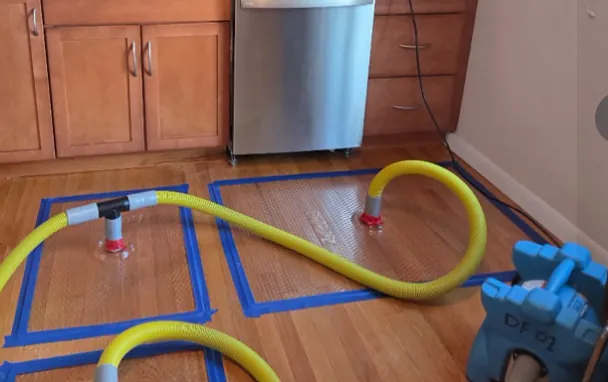
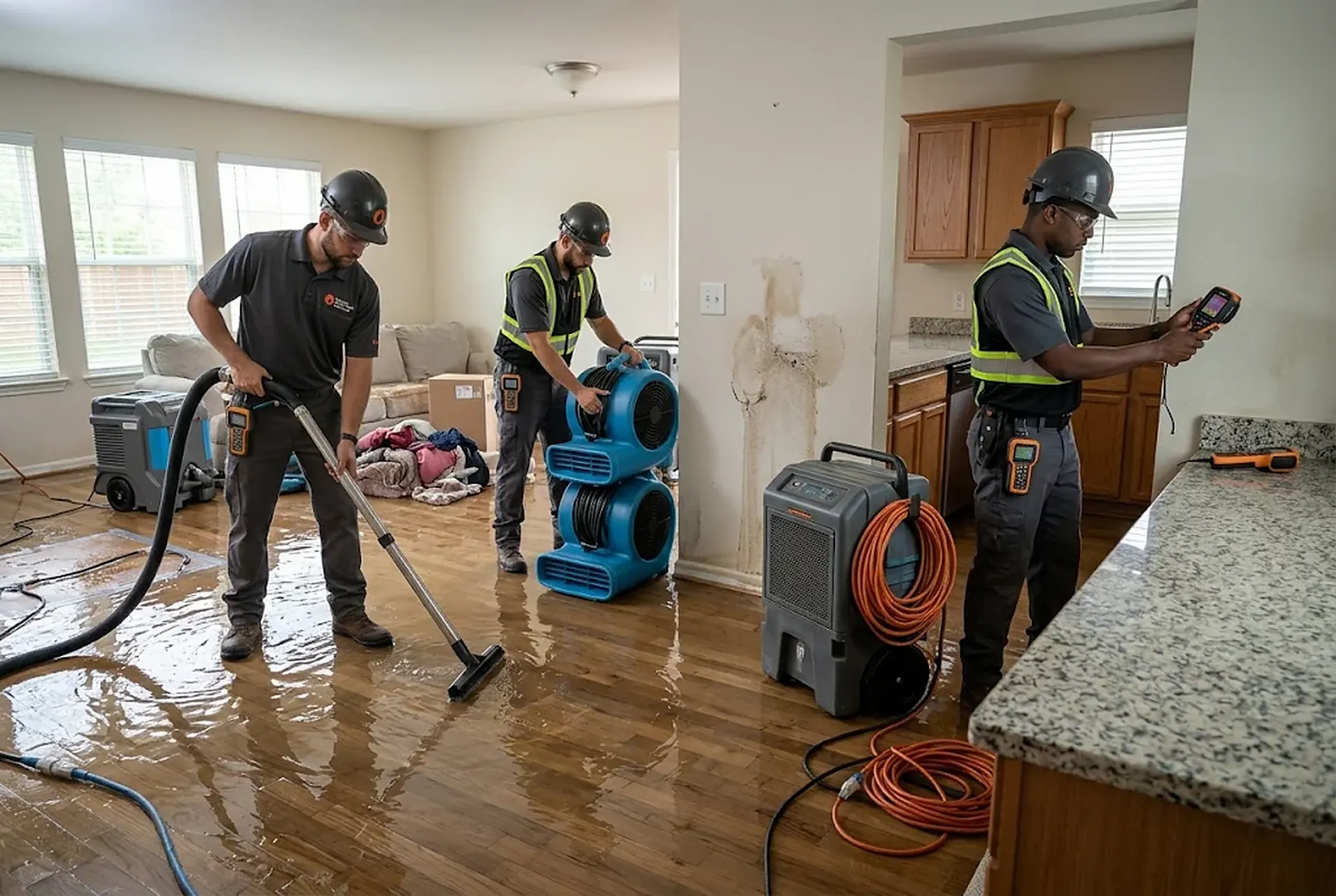
- Call for extraction and drying within hours, not days.
- Insist on daily moisture readings until the dry standard is met.
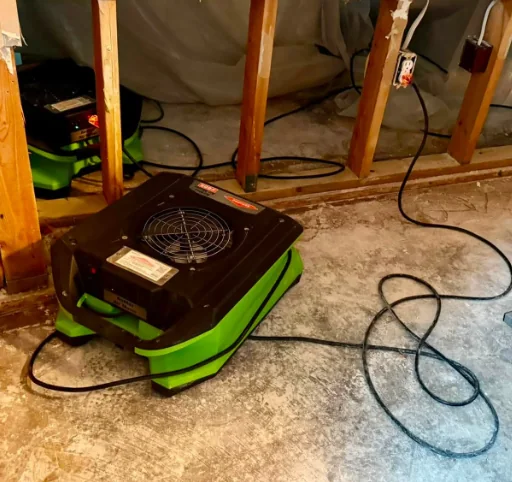
- Remove wet carpet pad and insulation instead of trying to dry it.
- Keep indoor humidity between about 30% and 50%.
- Check attic AC drain pans and condensate lines each spring.
See our guide to how long water damage takes to dry and the warning signs of an attic AC or water heater leak.
Need help with this now? See water damage mold remediation in Garland, or read how long water damage takes to dry.