Does Homeowners Insurance Cover Water Damage in Texas?
What Texas homeowners policies usually cover, what they exclude, and how to file a water damage claim in Garland without losing coverage.
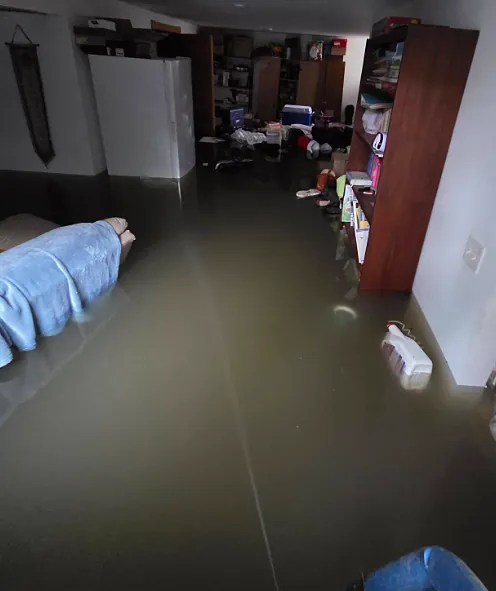
Texas homeowners insurance usually covers sudden and accidental water damage, such as a burst pipe, a split supply line, or water that comes through a storm-damaged roof. It usually does not cover slow leaks, rising flood water, wear and tear, or sewer backups without an endorsement. Read your policy's water and mold sections before you file.
This guide is general information, not legal advice. Your policy, your insurer, and the details of your loss decide what is covered. The Texas Department of Insurance has consumer guides and a help line if you have a dispute.
What Texas homeowners policies usually cover
- Burst pipes from freezing or sudden failure
- Appliance failures, like a washing machine hose or water heater tank that bursts
- Roof leaks after hail or wind that damaged the roof
- Fire sprinkler discharge and water used to put out a fire
- AC or plumbing overflow that is sudden, not ongoing
Most policies cover both the mitigation (extraction and drying) and the repairs, minus your deductible.
5 common exclusions
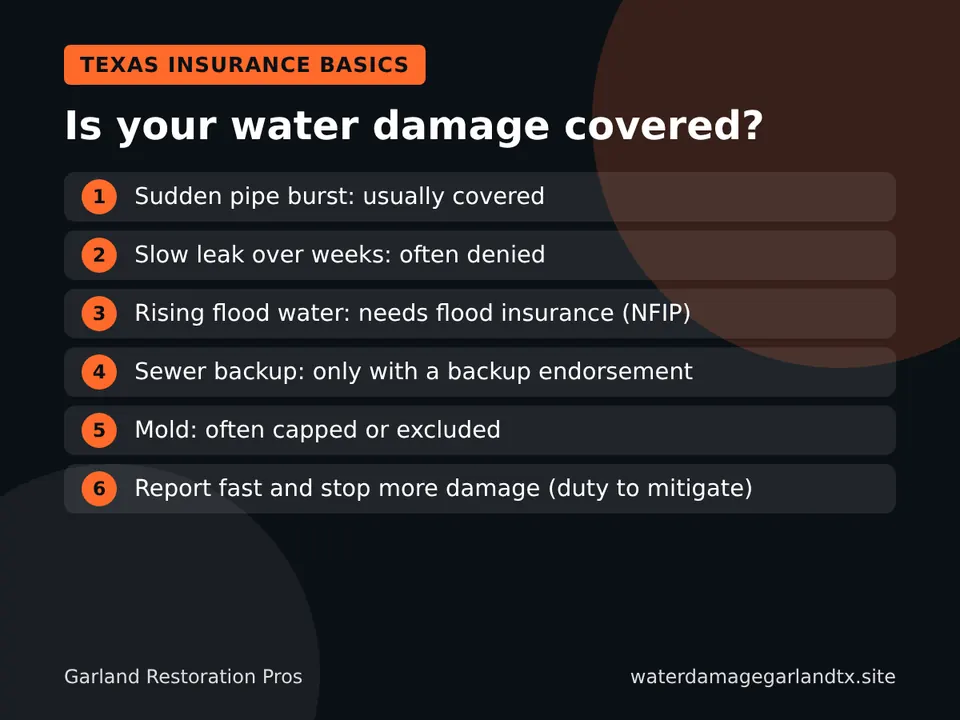
The five most common water damage exclusions in Texas are slow or repeated leaks, flood or surface water, sewer and drain backup, mold beyond a set limit, and damage from neglect or poor maintenance.
- Slow leaks. A drip under a sink that rotted the cabinet over months is usually excluded.
- Flood. Rising water from a creek, street, or heavy rain at ground level needs flood insurance through the NFIP or a private carrier.
- Sewer backup. Needs a water backup endorsement on most policies.
- Mold. Often limited to a small dollar amount or excluded unless it results from a covered sudden loss.
- Neglect. Failing to fix a known problem or keep heat on in a vacant home can void coverage.
Flood insurance in Garland
Parts of Garland near Duck Creek, Rowlett Creek, Spring Creek, and the Lake Ray Hubbard shoreline sit in or near mapped flood zones. Even outside those zones, flash floods can push water into homes. NFIP policies usually have a 30-day waiting period, so buy before storm season, not during it.
How to file a water damage claim
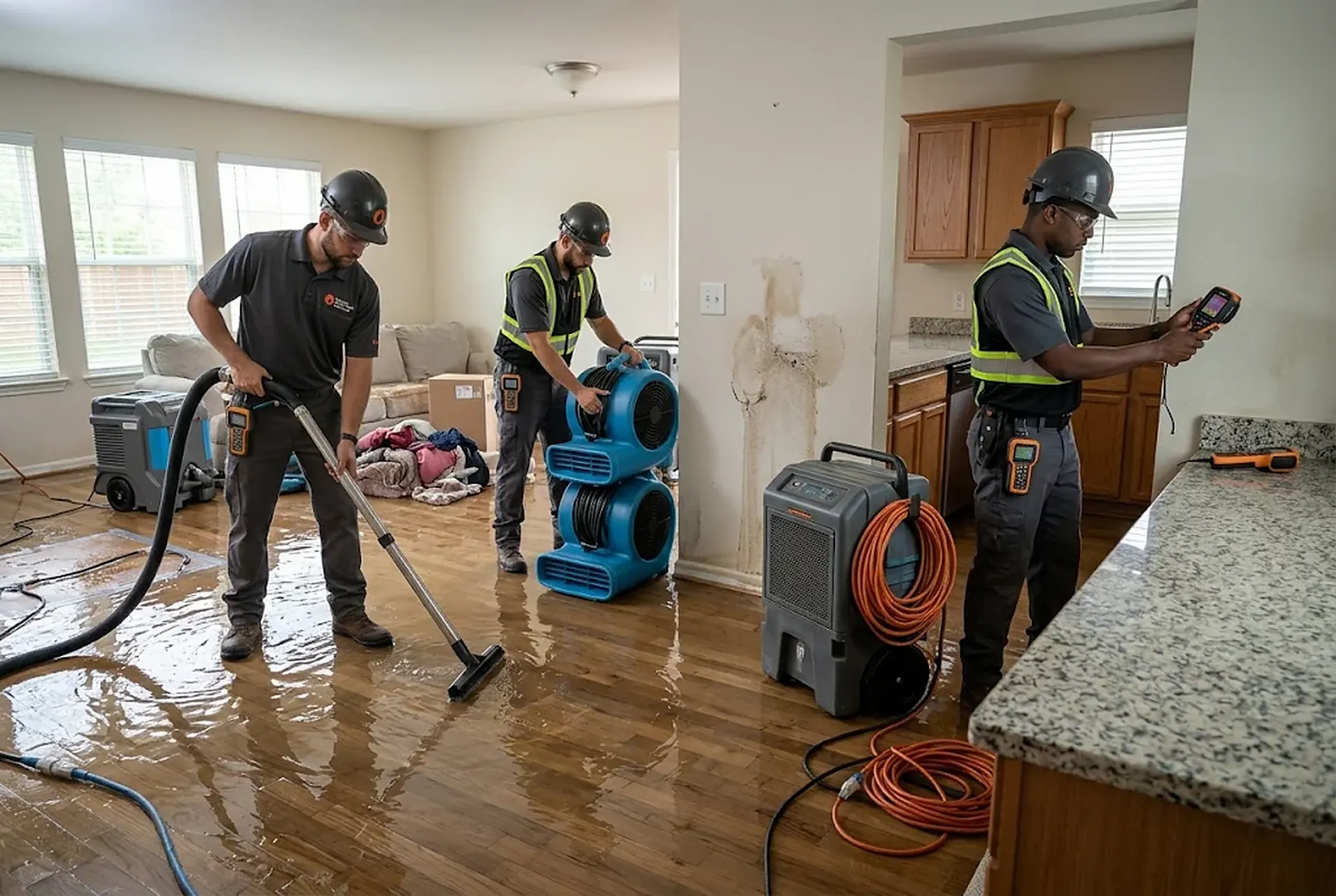
Stop the water, take photos, start mitigation, and call your insurer the same day. Keep every receipt and the provider's moisture logs. Insurers expect you to prevent further damage, so waiting for the adjuster before drying can hurt your claim.
- Stop the source and make the home safe.
- Photograph and video every wet area before cleanup.
- Call a water damage provider to start emergency water damage mitigation in Garland.
- Report the claim by phone or app and write down the claim number.
- Keep damaged items until the adjuster sees them or says you can toss them.
- Ask the provider for a written scope, photos, and daily drying logs.
- Review the adjuster's estimate line by line before repairs.
Deductibles and payments
Many Texas policies use a percentage deductible for wind and hail, such as 1% or 2% of dwelling coverage, and a flat deductible for other losses. On a $300,000 Garland home, a 1% deductible is $3,000. If the loss is close to your deductible, ask the provider for a price first and decide whether to file.
If your claim is denied or underpaid
- Ask for the denial in writing with the policy language they used.
- Get a second estimate and the provider's moisture documentation.
- Ask about the appraisal clause in your policy.
- Contact the Texas Department of Insurance consumer help line.
Renters, condos, and landlords
Renters in Garland apartments are usually covered by their own renters policy for personal belongings, while the landlord's policy covers the building. Condo owners often have an HO-6 policy that covers interior finishes, while the association covers the structure. If a leak in one unit damages another, both policies may be involved, so report to your insurer and notify the property manager in writing.
Landlords should check whether their dwelling policy covers water damage the same way a homeowners policy does. Many have narrower water coverage and different deductibles.
Keep a claim file
Start a folder the day of the loss: photos, the claim number, adjuster contacts, provider invoices, moisture logs, and receipts for hotels or meals. A complete file shortens the claim and helps if you need to dispute the estimate.
Related reading
See the water damage restoration cost guide for typical prices, and what to do when a pipe bursts in Garland for the first-hour checklist.
Need help with this now? See emergency water damage mitigation in Garland, or read water damage restoration cost guide.