What is water damage remediation?
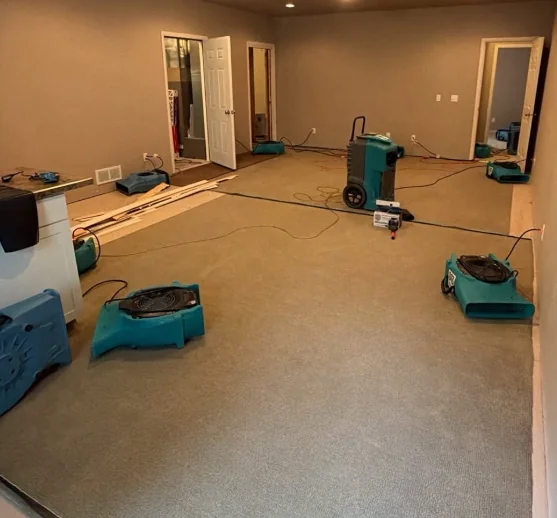
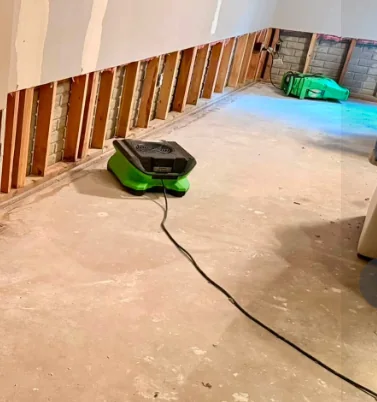
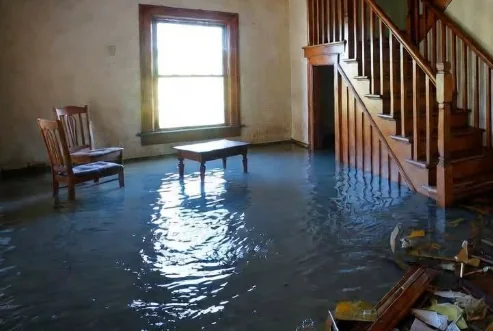
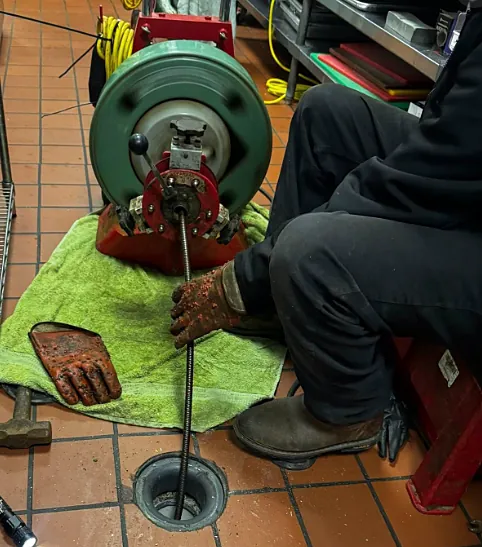
Water damage remediation is cleaning up the damage a leak leaves behind, most often mold. It means finding the moisture source, containing the area, removing moldy materials, cleaning what is left, and drying the structure so mold cannot regrow.
Mold needs three things: moisture, food, and time. Drywall paper, wood, and carpet backing are food. Garland's warm, humid months speed it up. Take away the moisture and mold stops growing, which is why remediation always starts with fixing the leak.
Signs of water damage mold
Look for a musty smell, dark spots or fuzzy growth on drywall or baseboards, peeling paint, warped trim, and stains that grow. Allergy symptoms that ease when you leave the house can also be a sign of hidden mold.
- Musty odor in a closet, bathroom, or upstairs bedroom
- Black, green, or white spots near the floor or ceiling
- Stains around AC vents or under windows
- Soft or crumbling drywall at the base of a wall
- Mold under sinks after a slow drip
- Water damage that was never dried by a pro
Where we find water damage mold in Garland homes
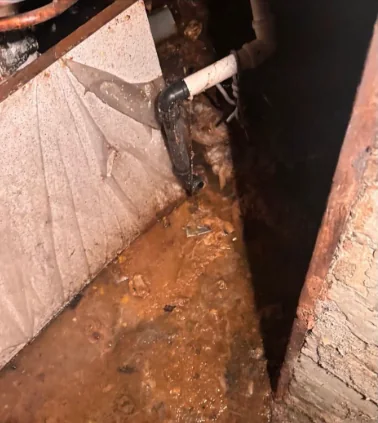
Under attic AC units and water heaters. A slow overflow wets insulation and the ceiling for weeks before anyone sees a stain.
Bathrooms and laundry rooms. Leaking toilet wax rings, shower pans, and washer hoses soak subfloor and the bottom of walls.
Behind kitchen cabinets. Dishwasher and ice maker leaks hide under the cabinet base.
Exterior walls after storms. Wind-driven rain at windows in North Garland and along Lake Ray Hubbard wets the wall cavity.
Homes that sat closed up. Rentals and vacation homes with an unnoticed leak can grow mold across several rooms.
How water damage mold remediation works
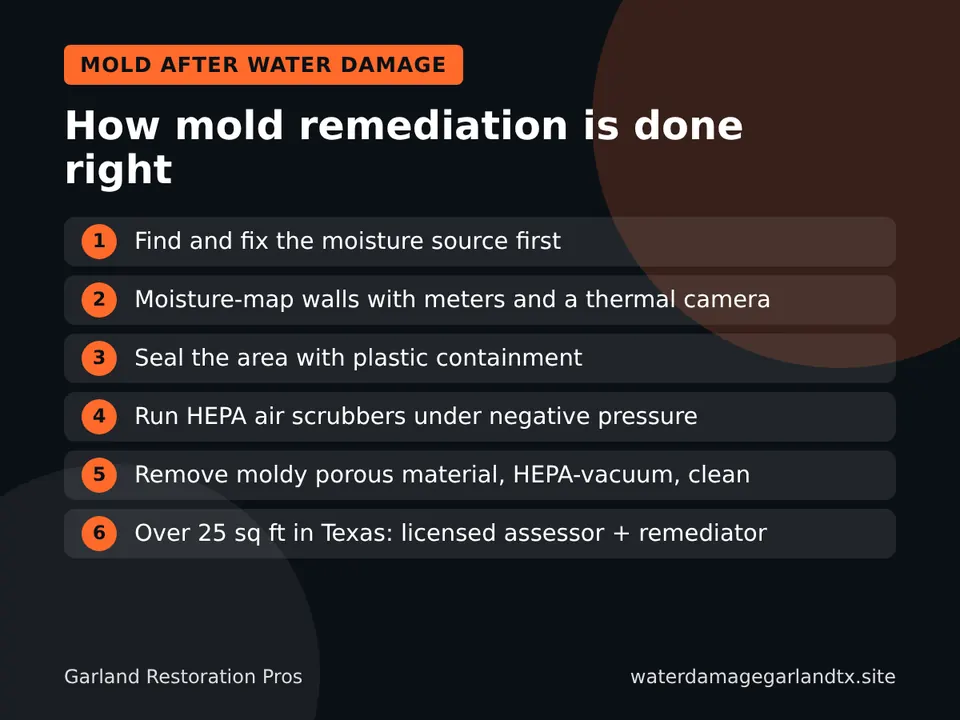
Professional remediation follows the IICRC S520 standard: assess the area, fix the moisture, set up containment, run HEPA air filtration, remove contaminated porous materials, clean and HEPA-vacuum surfaces, dry, and verify. In Texas, larger jobs need licensed pros.
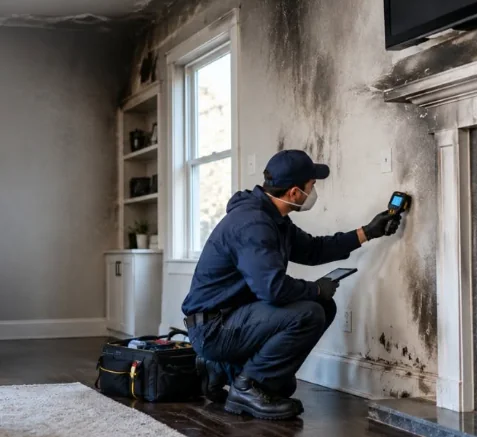
- Assess. Moisture meters and a thermal camera map wet areas. A visual inspection sizes the growth.
- Fix the moisture. The leak is repaired or the plumber is called.
- Contain. Plastic sheeting and zipper doors seal the work area so spores do not spread.
- Filter the air. HEPA air scrubbers create negative pressure inside the containment.
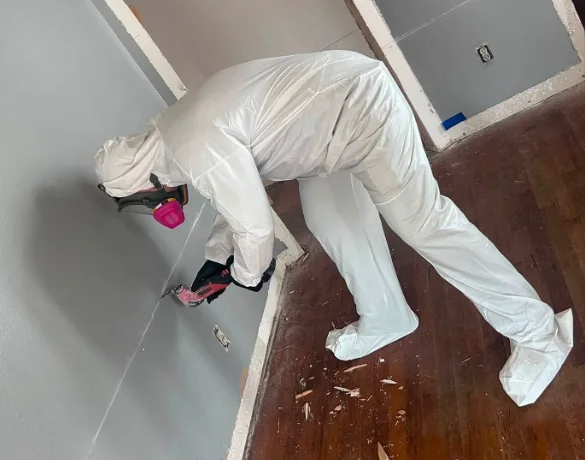
- Remove and clean. Moldy drywall, insulation, and carpet are bagged and removed. Framing is HEPA-vacuumed, scrubbed, and treated.
- Dry and verify. The area is dried and checked before rebuild.
The Texas 25 square foot rule
In Texas, mold remediation of 25 contiguous square feet or more of visible mold generally requires a licensed mold assessor to write a protocol and a separate licensed mold remediation company to do the work, under Texas Department of Licensing and Regulation (TDLR) rules.
The assessor and the remediator must be independent of each other. After the work, a clearance check confirms the job passed. Homeowners working on their own home are exempt, but insurers and buyers often want the paperwork. Smaller areas can be handled by a trained water damage crew.
How much does mold remediation cost in Garland?
Mold remediation in Garland usually costs about $1,500 to $4,000 for one contained area, such as a bathroom wall or under a kitchen sink. Attic, multi-room, or HVAC jobs can cost $5,000 to $10,000 or more. The licensed assessment is a separate fee.
| Mold job | Approx. cost |
|---|---|
| Small area under 10 sq ft | $500 – $1,500 |
| One room or wall, with containment | $1,500 – $4,000 |
| Attic or several rooms | $4,000 – $10,000+ |
| Mold assessment / clearance (Texas licensed) | $300 – $900 each |
Can you remove mold yourself?
You can clean a small spot of surface mold on a hard surface with detergent and water while wearing gloves and an N95 mask. Do not try to remove mold from drywall or insulation larger than a few square feet, and never use bleach on porous materials.
Bleach whitens the surface but leaves roots in drywall and wood. Dry sanding or scraping spreads spores through the house. If the mold came from a recent leak, the bigger issue is the moisture still in the wall, which needs meters to find.
To stop mold before it starts, the fix is fast drying. See emergency water damage mitigation in Garland.
Related reading: mold after water damage timeline and attic AC and water heater leak warning signs.